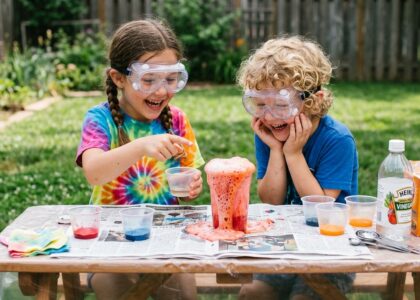
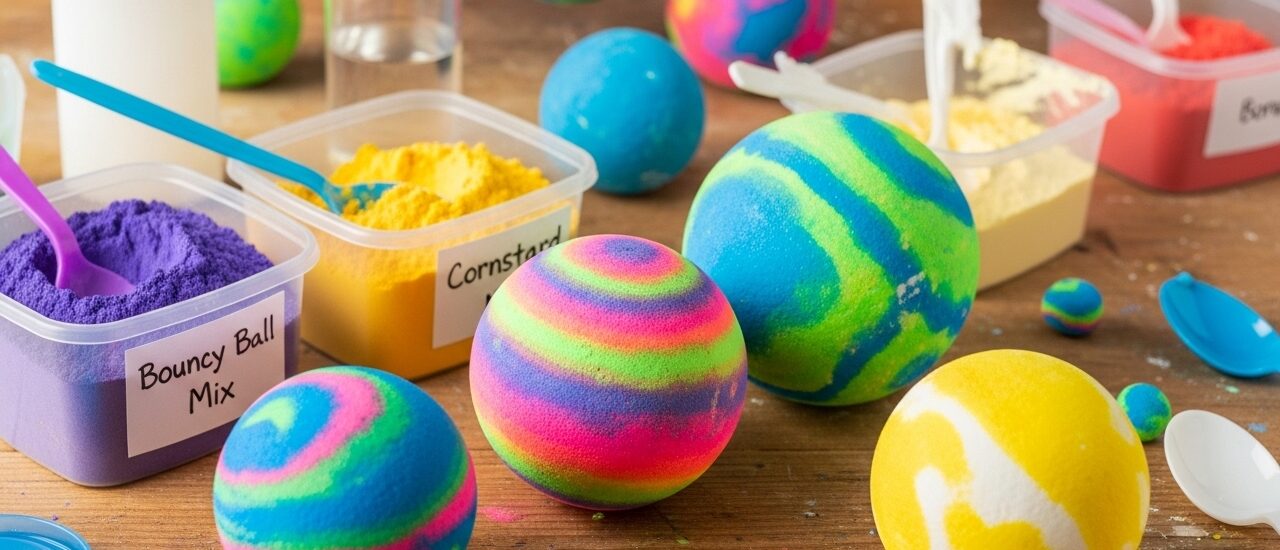
Science becomes truly exciting when children can see it, touch it, and experiment with it using their own hands. One particularly fun and educational activity is making bouncy bungees, stretchy, rubber-like strands created through a simple chemical reaction. These homemade bungees behave like small elastic cords stretching, bouncing, and snapping back into shape while teaching children important concepts about chemistry.
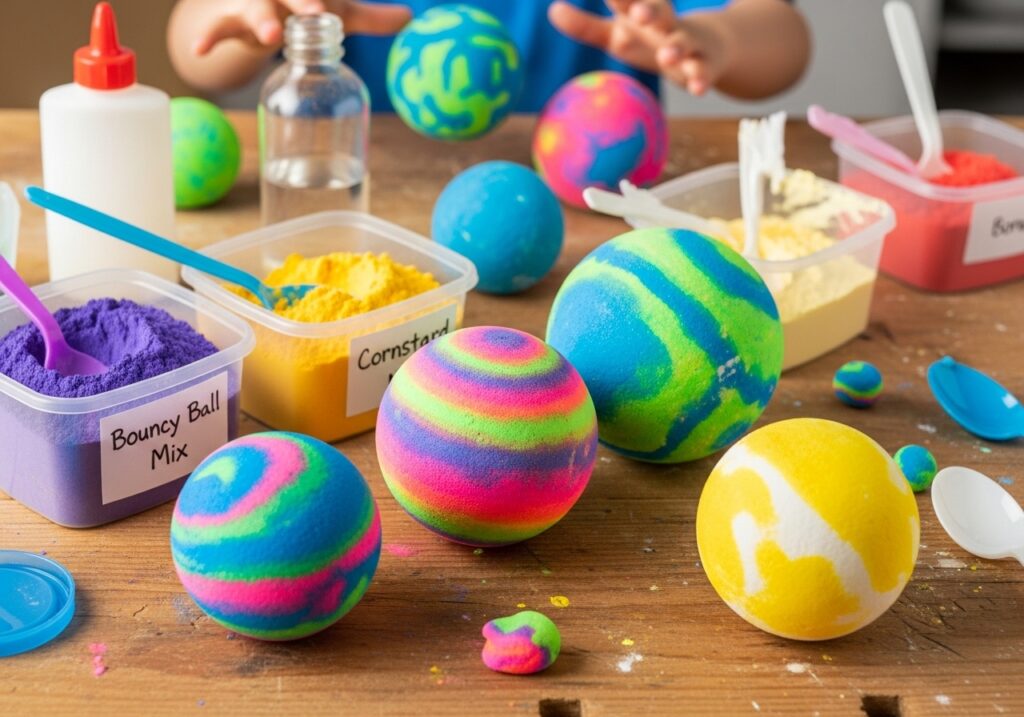
This activity combines creativity, learning, and hands-on discovery. Children not only enjoy making something playful, but they also begin to understand how different substances interact to create new materials. With supervision and simple household ingredients, this experiment can turn an ordinary afternoon into a mini science adventure.
What Are Bouncy Bungees?
Bouncy bungees are flexible, elastic strands formed through a chemical process called polymerization. In simple terms, polymerization occurs when small molecules join together to form long chains called polymers. These polymers give materials their stretchy and rubbery properties.
When children mix glue containing polyvinyl acetate with a special activating solution, the molecules link together to form a soft, flexible polymer. The result is a material similar to slime but firmer and capable of being shaped into long, stretchy cords that bounce slightly when pulled.
These homemade bungees are fascinating because they demonstrate how chemistry can transform ordinary liquids into a new solid material with completely different properties.
Why This Experiment Is Great for Kids
This project is not only entertaining but also educational. It encourages children to explore basic scientific ideas such as:
- Chemical reactions
- Polymer formation
- Texture and elasticity
- Observation and experimentation
Children also develop problem-solving skills as they adjust ingredients and observe how the mixture changes.
Materials Needed
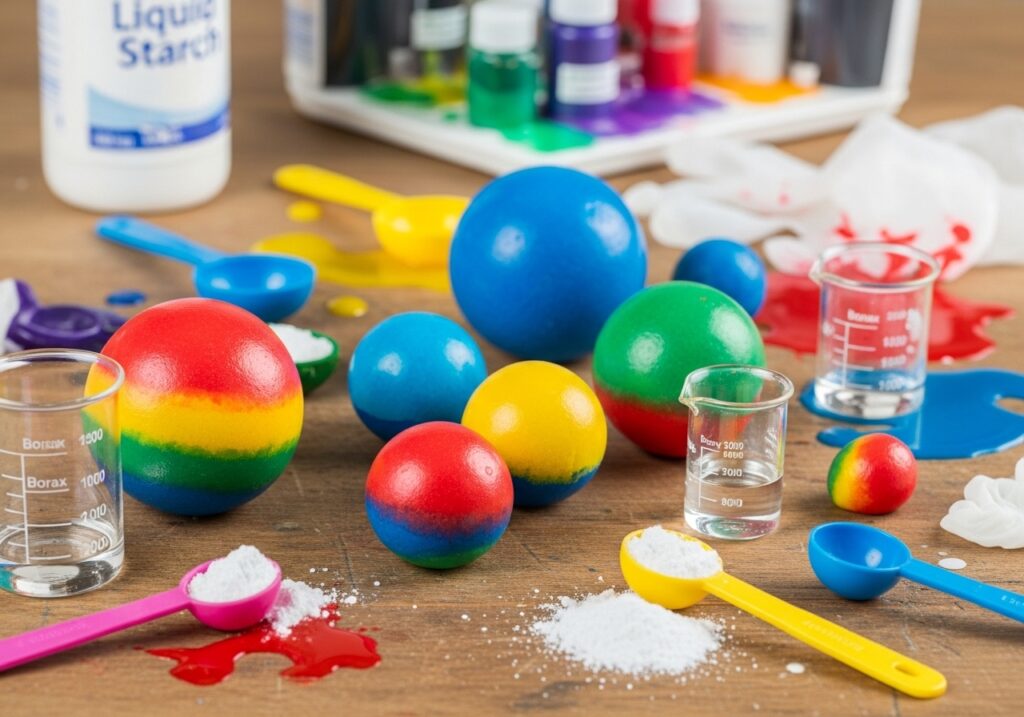
To make homemade bouncy bungees, you will need the following ingredients and tools:
Ingredients:
- 1 cup white school glue (polyvinyl acetate glue)
- 1/2 cup warm water
- 1 tablespoon borax powder
- 1 cup warm water (for the borax solution)
- Food coloring (optional)
Tools:
- Two mixing bowls
- Measuring cups and spoons
- A spoon or craft stick for stirring
- Rubber gloves (optional but recommended)
- A clean work surface
These ingredients are easy to find and inexpensive, making this experiment perfect for classrooms or home activities.
Step-by-Step Recipe for Bouncy Bungees
Step 1: Prepare the Glue Mixture
Pour 1 cup of white glue into a bowl. Add 1/2 cup of warm water and stir thoroughly until the mixture becomes smooth and evenly blended.
If desired, add a few drops of food coloring. This step allows children to create bright, colorful bungees that look even more exciting.
Step 2: Make the Activating Solution
In a separate bowl, mix 1 tablespoon of borax powder with 1 cup of warm water. Stir until the borax dissolves completely. This solution acts as the chemical activator that will transform the glue mixture into a stretchy polymer.
Step 3: Combine the Mixtures
Slowly pour a small amount of the borax solution into the glue mixture while stirring continuously. Within seconds, the liquid will begin to thicken and form a gel-like substance.
As the reaction continues, the mixture will pull away from the sides of the bowl and form a soft mass.
Step 4: Knead the Polymer
Remove the newly formed material from the bowl and knead it gently with your hands. At first, it may feel sticky, but as you continue kneading, it will become smoother and more elastic.
If the mixture is too sticky, add a few drops of the borax solution and knead again.
Step 5: Shape the Bungees
Once the material becomes stretchy and firm, children can roll it into long, thin strands to create bungee-like cords. These strands can stretch, bounce, and twist in fun ways.
The bungees can also be shaped into loops, spirals, or small balls.
The Science Behind the Experiment
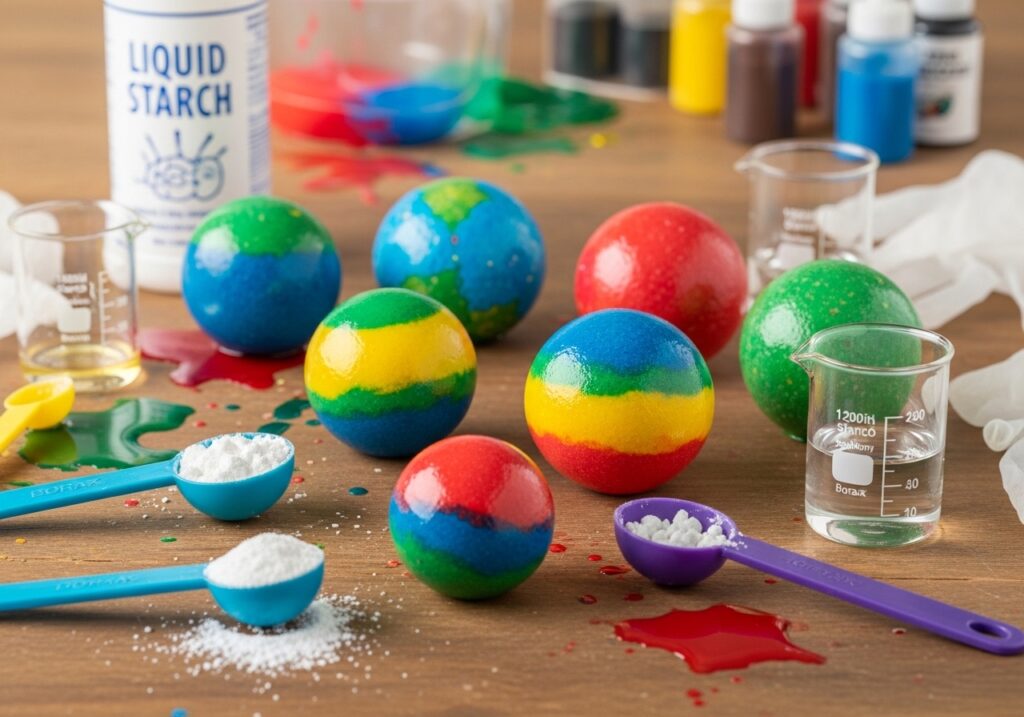
The magic of this experiment lies in the chemical reaction between glue and borax.
White glue contains polyvinyl acetate molecules, which normally slide past each other freely in liquid form. When borax is added, it creates cross-links between the polymer chains, connecting them together.
These connections form a flexible network that traps water and creates a rubbery material. This structure gives the bungees their unique properties:
- Stretchiness
- Flexibility
- Bounce
In simple terms, the liquid glue turns into a soft polymer solid because the molecules become linked together.
Safety Tips
Although the ingredients are relatively safe, adult supervision is important. Keep these precautions in mind:
- Do not allow children to ingest the mixture
- Wash hands thoroughly after the experiment
- Avoid contact with eyes
- Store leftover borax safely
Following these basic guidelines ensures the activity remains safe and enjoyable.
Creative Variations
Once children understand the basic recipe, they can experiment with different variations:
Glow-in-the-dark bungees: Add glow powder or glow paint to the mixture.
Glitter bungees: Mix glitter into the glue before adding the borax solution.
Multi-colored strands: Divide the glue mixture into separate bowls and add different colors before combining.
These variations encourage children to experiment and observe how small changes affect the final result.
Educational Benefits
Hands-on experiments like this one provide valuable learning opportunities. Children gain experience with:
- Following instructions step by step
- Observing chemical changes
- Developing fine motor skills
- Practicing patience and curiosity
Science becomes less abstract and more exciting when children see reactions happening right in front of them.
A Fun Way to Discover Chemistry
Making bouncy bungees at home or in the classroom turns science into an adventure. Instead of simply reading about polymers, children create them with their own hands. The transformation from liquid glue to stretchy elastic strands feels almost magical, yet it is entirely based on real chemistry.
Activities like this help young learners realize that science is not limited to laboratories and textbooks. It exists in everyday materials and simple reactions that anyone can explore.
Conclusion
Bouncy bungees are a perfect example of how learning and play can come together. With only a few ingredients and a simple chemical reaction, children can create stretchy, colorful cords while discovering the fascinating world of polymers.
This experiment encourages curiosity, creativity, and hands-on exploration three essential ingredients for developing a lifelong interest in science. By turning everyday materials into a fun chemical discovery, children experience the joy of learning in the most engaging way possible.